7 Rules Meme Coin Traders Learn the Hard Way From a $1,000,000 Run
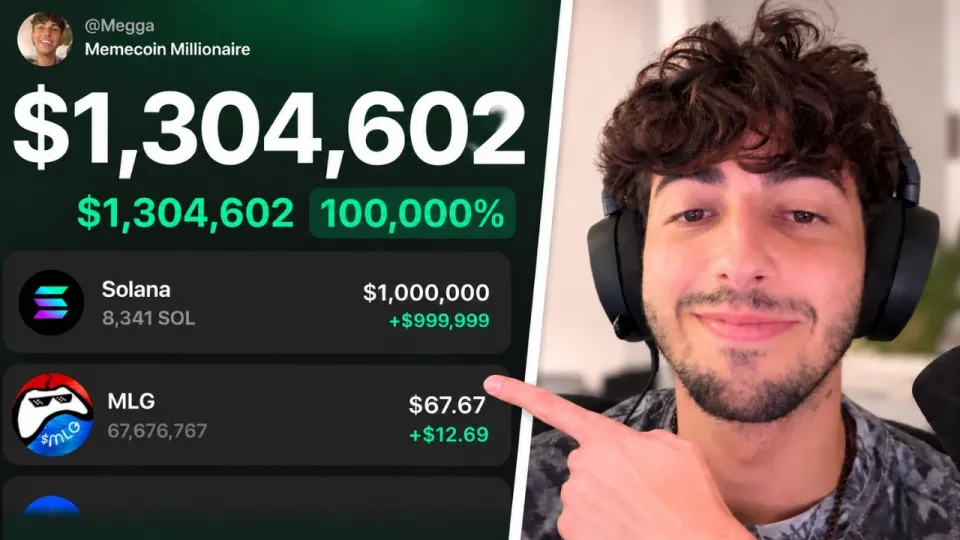
Video: How I Made $1,000,000 Trading Memecoins (FULL BREAKDOWN)
Need articles like this for your video? They help promote it on YouTube and Google — order them in the Telegram bot @sat_sit_bot. Articles with your video embedded are written and posted by the bot itself — on popular topical sites (no ads). Try it free: 50 articles on us.
· based on the channel Megga
Meme coin trading is a zero-sum game where profit comes from speed, position sizing and exit discipline rather than from the token itself, and Megga's $1,000,000 breakdown shows the same pattern: thousands of hours of screen time, small repeatable edges and strict rules about how much can be lost on any single launch. Anyone who wants the structured version of that process can start with the free course linked in the video description here: free meme coin trading course.
What a $1,000,000 meme coin PnL actually represents
A seven-figure meme coin result is cumulative, not a single lucky trade, and it is built from hundreds of entries where the average edge is small. The number that matters is not the biggest win but the ratio between average win and average loss across the whole sample. A trader who risks 2% of the stack per idea and hits a 3:1 payoff profile needs roughly a 35–40% win rate to compound; a trader who risks 20% per idea needs a near-perfect streak and usually blows up first. That is why the video's framing — full breakdown rather than highlight reel — matters more than the headline figure. Meme coins on Solana, Base and similar chains move in minutes, so the PnL curve is a function of execution quality, not of holding a token for months.
Why 9 to 12 hours of screen time is the real strategy
Screen time in meme coin trading is not passive watching; it is a research loop that runs before, during and after every launch. A viewer asked directly what fills those hours, and the honest answer is unglamorous: scanning new pairs, checking holder distribution and dev wallets, reading the chat for narrative shifts, tracking which wallets consistently buy early, and logging every trade for review. The loop repeats because the meta rotates — a format that printed money last week (a ticker theme, a launch mechanic, a specific deployer) stops working once it is crowded. Traders who only show up for the buy miss the part where the edge is identified. Treat the hours as data collection: the more launches you observe without risking money, the cheaper your education becomes.
The five-step process behind repeatable meme coin entries
A repeatable meme coin process looks the same across traders and can be broken into five concrete steps.
- Screen for the narrative. Identify which theme is currently attracting volume and fresh wallets, not which theme was hot two weeks ago.
- Verify the contract and the deployer. Check holder concentration, whether the dev wallet has sold on previous launches, and whether liquidity is locked or burned.
- Size the position before entry. Decide the maximum loss in dollars first, then convert it into a token amount — never the other way around.
- Plan the exit in tranches. Selling 25–50% into the first spike locks in the trade and removes the emotional pressure that turns a winner into a hold.
- Log the result. Record entry, exit, thesis and mistake; the log is what turns 12-hour days into an actual edge.
Position sizing and the liquidity problem nobody escapes
Every dollar made in meme coins is a dollar lost by someone else, so the exit is the hardest part of the trade and the reason most participants become liquidity for faster players. Thin order books mean a position that looks like a $10,000 winner on paper can realize $4,000 once slippage and cascading sells are counted. Practical rules that survive contact with real markets: keep any single position small enough that a 90% drawdown does not change your month, split exits across several price levels, and never add to a losing position because the chart "looks cheap." The same logic explains the recurring accusation in the comments that profits come from rugging others — the mechanics of a zero-sum market do not require malice, but they do require someone to hold the bag at the end, and the only defense is selling before the crowd decides to.
Risk controls that separate survivors from one-hit stories
Survival in meme coin trading is a risk-management problem, and the failure cases are almost always identical: one oversized bet, one compromised wallet, one revenge trade after a loss. A viewer described hitting a 200x and then losing a wallet to a phishing drain, followed by several more losing positions — a sequence that erases a year of good decisions in a week. Concrete controls: use a dedicated hot wallet with limited funds and a separate cold wallet for profits, never sign approvals from unknown sites, cap daily loss at a fixed percentage of the stack, and stop trading after two consecutive rule violations regardless of the PnL. Drawdowns are part of the process, but a drawdown caused by a drained wallet is not a lesson — it is an avoidable loss.
How to get into trading groups and voice chats with a small account
Access to serious meme coin groups is earned through a verifiable track record, not through asking, and a $45,000 all-time PnL is a reasonable starting point if it is documented. What gets a smaller account into voice chats and DM networks: a public log or wallet history that shows consistent process, a specific skill you bring (fast contract checks, narrative research, on-chain wallet tracking), and being useful in the chat before asking for anything. Beginners are filtered out less by account size than by behavior — traders who ask for calls without a thesis are treated as exit liquidity, while traders who share a screened setup get invited back. Building that reputation takes weeks of visible activity on X and in streams, which is exactly the kind of work the 9-to-12-hour schedule is for.
Useful links
- Free meme coin trading course
- Trading platform with the lowest fees used in the video
- Megga on Twitch
- Megga on TikTok
- Megga on X
Final takeaway
A $1,000,000 meme coin result is the visible output of a process most people never see: long screen sessions, small sized bets, documented mistakes and a hard rule against letting one trade decide the month. The realistic goal for a new trader is not the headline number but a repeatable loop — screen, verify, size, exit, log — that survives a losing streak. Channel Megga deserves credit for publishing the full breakdown rather than only the wins, because the drawdowns are where the actual lessons live. Start with the process, keep the risk per idea small, and let the compounding do the work. The free course is the fastest way to get the framework in one place: start the free course.
Key takeaways
- Megga's breakdown covers a $1,000,000 cumulative PnL built on meme coin trading, with a free course linked in the video description.
- Screen time cited in the video is 9 to 12 hours a day, mostly spent scanning launches, wallets and chats rather than clicking buy.
- Meme coins are zero-sum: every dollar of profit comes from another trader's loss, which is why exit liquidity is the core risk.
- A 200x win can be erased by a single phishing drain or a few oversized losing trades, as one viewer's story shows.
- Networking matters: small accounts get into trading groups and voice chats by showing a verifiable track record, not by asking.
Source: How I Made $1,000,000 Trading Memecoins (FULL BREAKDOWN) · Markdown version
Questions & answers
How much capital do you need to start trading meme coins seriously?
There is no fixed minimum, but the practical threshold is an amount you can lose entirely without changing your life, plus enough to take positions where fees and slippage do not eat the edge. Many traders start with a few hundred to a few thousand dollars and focus on process rather than size. What matters more than the starting stack is a documented track record, which is what gets you into trading groups and voice chats.
Is meme coin trading just taking money from other people?
Mechanically, yes — meme coins are a zero-sum market, so every realized profit corresponds to someone else's loss, usually a later buyer. That does not make trading unethical, but it does mean exit discipline is the whole game. Assume you are competing against faster wallets and plan your exits before entry.
How do you tell if a new meme coin has real momentum or is a trap?
Check holder concentration, whether the deployer wallet has a history of dumping previous launches, and whether liquidity is locked or burned. Then watch whether volume and new wallets keep arriving after the first spike rather than fading. No check is perfect, which is why position sizing matters more than conviction.
Can you trade meme coins with a full-time job?
Yes, but the model changes: you cannot compete on speed during launch hours, so you shift to fewer, better-researched positions and pre-planned limit exits. Automating alerts and logging trades takes minutes a day. What you give up is the high-frequency edge that full-time screen time provides.